
There are several leading contemporary artists who have gone to extremes to explore ideas in the creation of new artwork. Using extreme methods has led these artists to display obsessive and borderline mad behaviours. In this new series, we’ll explore key works from leading contemporary artists which have pushed the boundaries of taste and art.
Bas Jan Ader was a Dutch conceptual artist who created film and photography to document his performances and actions. He was a prankster, a risk taker and a showman but his work also has a poignant message to tell. As the main protagonist, Ader leads us into the work and on an adventure into the unknown.
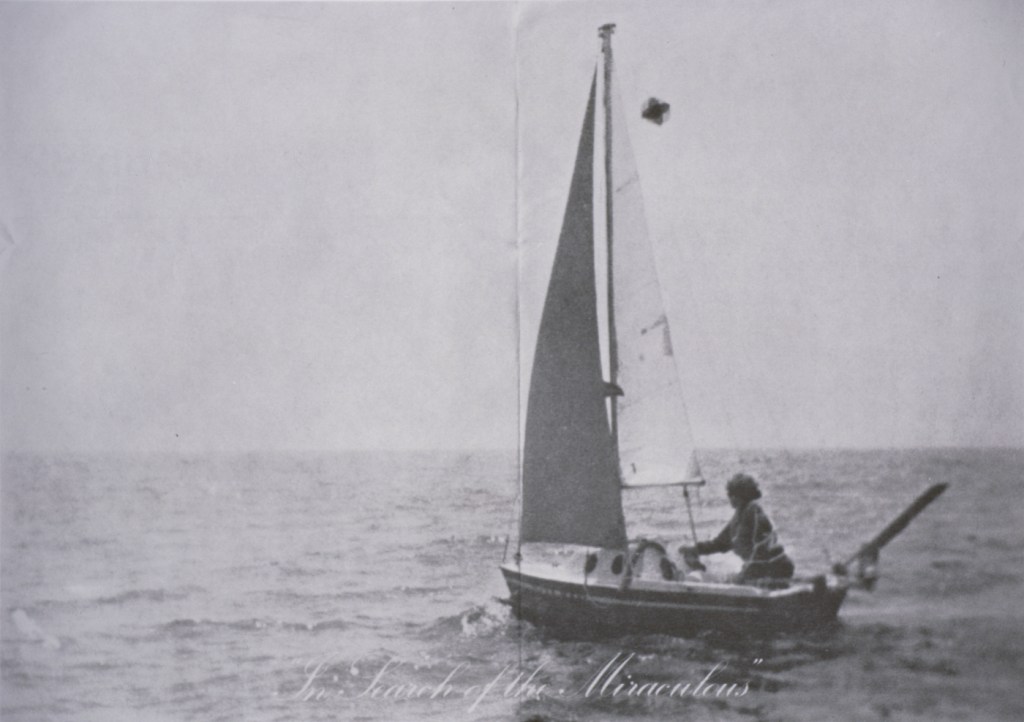
In 1975, Ader set out on a journey as part of a trilogy of events which made up the ‘In Search of the Miraculous’ project. The journey formed the second act of the trilogy and involved a solo attempt to sail across the Atlantic Ocean in a sail boat named the ‘Ocean Wave’. Ader planned to cross the Atlantic to reach England and then onwards to the Netherlands to an exhibition of his work in the Groniger Museum. The show had been planned to present a display of film and photography to compliment work shown in an earlier exhibition at the Claire Copley Gallery in Los Angeles. The two exhibitions and journey were conceived as a collective work and a way of connecting the theme of exploration and the geographic locations together.
Ader’s work explores themes of failure, absence and identity. His films and photographs document enigmatic performances and actions where Ader placed himself in situations with controlled risks. These short films often start and end abruptly. The results are pure slapstick but also tragic. In his ‘Fall series’ of short films, Ader can be seen placed in precarious situations including sitting on a chair on top of a steep sided roof, cycling a bicycle very close to a water canal or clinging to an unstable tree branch above a river. The outcomes, as the titles suggest, show Ader falling in pure slapstick comedy style. This is Jackass before there was Jackass. But there is also a sense of tragedy and when viewed on a loop the comical effect wains and we are left with a sad sense of inevitability.
After Ader set sail from Massachusetts in 1975 he was never seen again. Ader’s boat was found ten month later off the coast of Ireland containing only old food and various identification documents. Ader was listed as missing but later pronounced dead without the recovery of his body. The surviving photo of Ader leaving in the Ocean Wave was taken by his wife Mary Sue Ader Andersen.
Ader placed himself in jeopardy for his art and put the audience in the role of witness to the risks he had taken on. This shared experience creates a lived, emotional connection between the artist and the audience. It may be that in his search for a connection with the audience that Ader finally placed himself in a position of risk that he could not control. As Rene Daalder recalls; “He wanted to make a masterpiece, desperately” * even if it cost him his life. ‘In Search of the Miraculous’ and Ader’s death have become things of contemporary art folklore. Many conspiracy theories exist about Ader’s speculated survival and how he may have faked his death. Maybe he is still out there continuing the search for the miraculous.
Read more from the blog here.
*Rene Daalder, ‘Here is Always Somewhere Else, 2007, Agitpop Media
Further reading;
https://hyperallergic.com/336146/in-search-of-bas-jan-ader-the-artist-who-disappeared-at-sea/
https://en.wikipedia.org/wiki/Bas_Jan_Ader
https://www.moma.org/artists/32766
 contemporaryartprojects.art.blog