
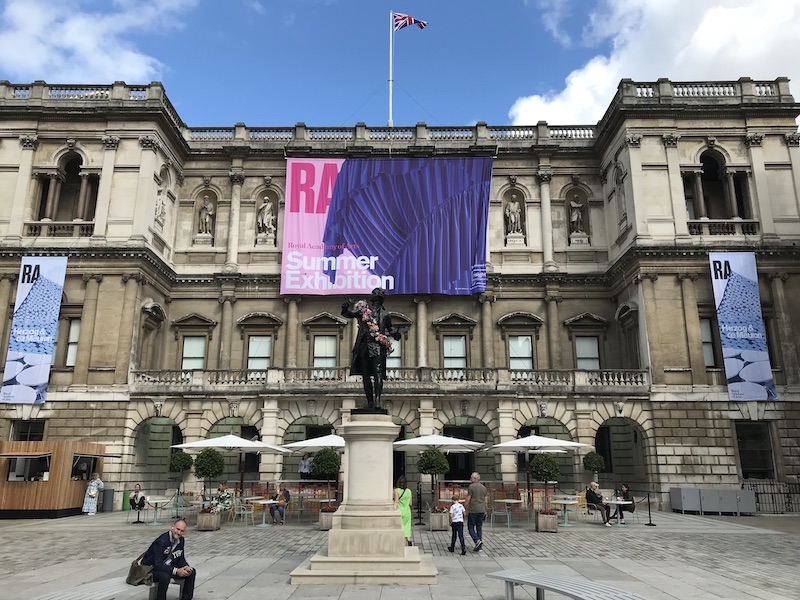
It’s been a while since I visited the Summer Exhibition at the RA. I used to go regularly but started to feel that it was getting samey and repetitive. The massive galleries were always packed, from floor to ceiling, with artworks made in conventional mediums, styles and subject matters. It was impossible to register so many artworks and the show just became one big blur of conventional fine art. Landscape, portrait, still life and a bit of abstract painting always dominated the format of the displays. Photorealism was the pinnacle of the exhibition. It seemed to have been chosen as the artistically aspirational style of choice and visitors loved it. Don’t get me wrong, it is impressive to view an artwork with the level of skill to be able to imitate a photograph but it soon became a gimmick which the Summer Exhibition used to peddle for years. It became dull and turgid. Bogged down in institutional tradition and established hierarchical tastes it seemed like that approach would never shift or reflect contemporary art practice adequately. It felt like nothing would every change.
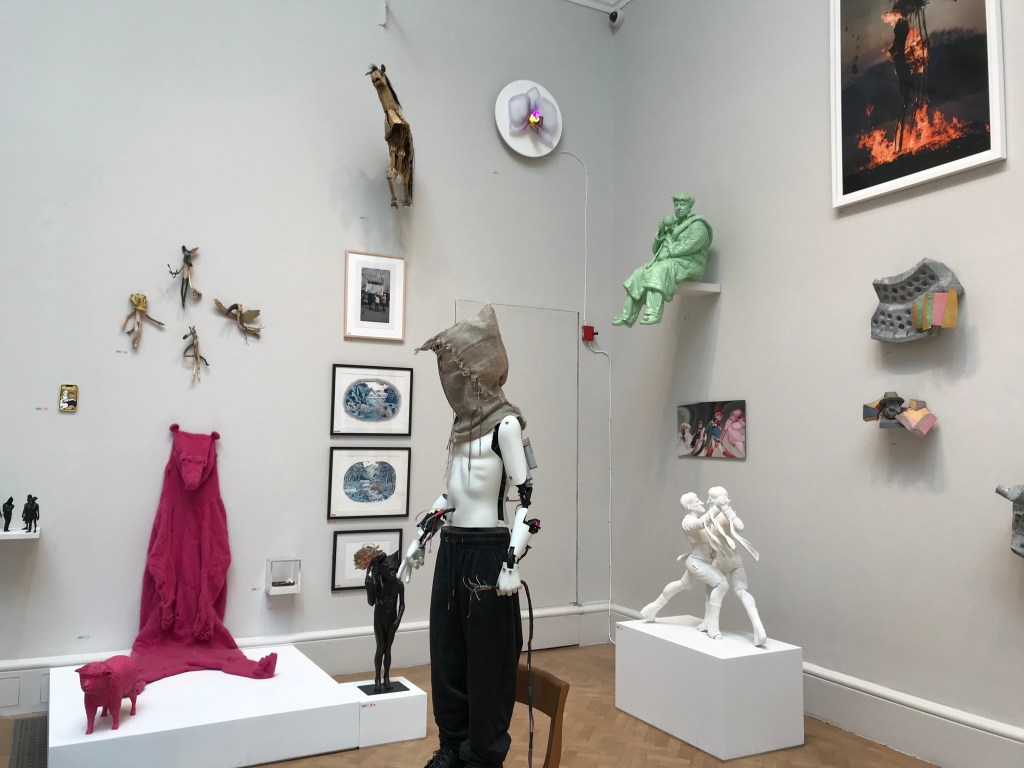
So, I decided to risk it and check out this year’s show to see if there had been any shifts in approach. The Summer Exhibition is the largest and oldest open submission show of contemporary art in the world, so thinking positively I hoped a change could be on the cards. I was happy to find a show with a greater diversity of artwork made in a variety styles and mediums. This year’s show was coordinated by artist David Remfry RA and is thematically based around the title ‘Only Connect’. It is more eclectic and the displays are less packed to the brim than in past editions. The galleries are thoughtfully arranged by different artist coordinators and each gallery has had its walls painted in a different colour to set a background tone for each space. One of the many highlights are the artworks selected by Tim Shaw RA in the second half of the show. The display is pretty wild and includes everything from a kinetic mannequin sculpture, a warped portrait of Donald Trump to a pink polar bear suit. The show offers the opportunity to check out some of the current trends and to see what artists are making and what is selling. I enjoyed finding that there is room for work exploring urban decay and social criticism. Washy paintings with fluorescent underpainting are also trending.
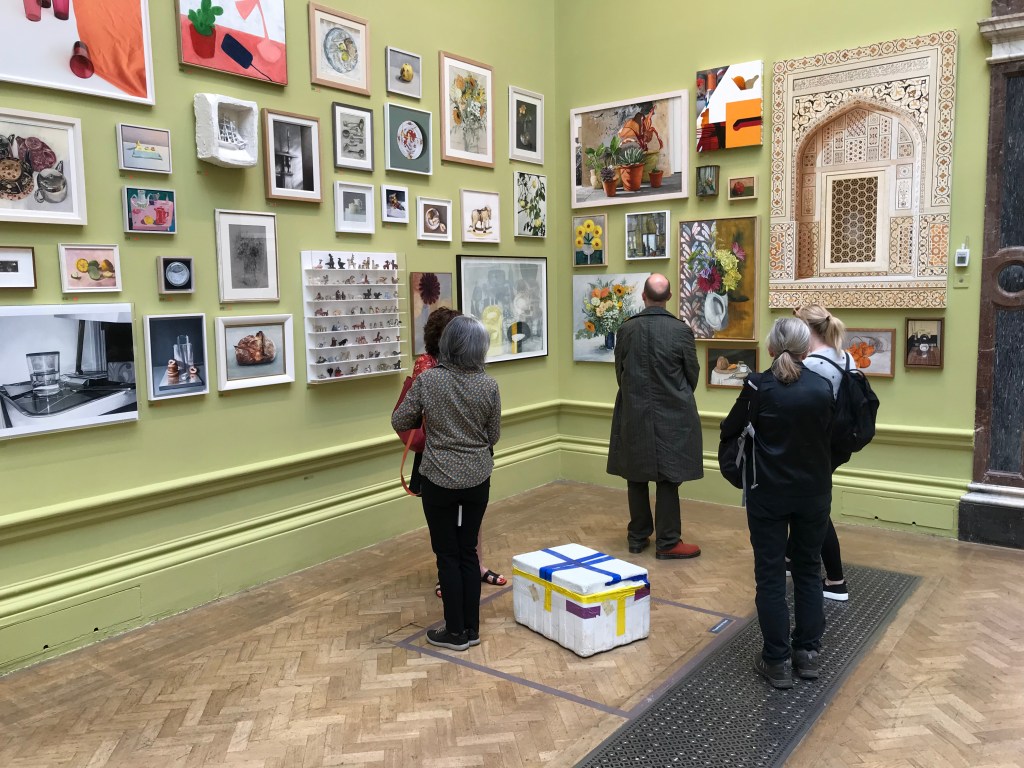
It is an exciting improvement to past editions but I found that the Summer Exhibition still falls short of showcasing contemporary art well enough. The show continues to group many of the artworks together by conventional categories and then segregates these from new forms of contemporary art. This approach creates a disconnect in the flow of the exhibition and display of works. Conceptual art was hit the hardest and I think it was a brave decision for any conceptual artist to include their work in the show. ‘Veg Box’ by Gavin Turk and ‘Rest in Pieces, or The Squatters (Charlie Meet Hammons Untitled (Night Train (1989)) by Ryan Gander are conceptual, sculptural works which imitate everyday objects. Gavin Turk’s work is a bronze sculpture of an ordinary polystyrene box and Ryan Gander’s piece is a sculpture of a dead or sleeping cat. They stood out like sore thumbs against the walls of still life painting in the gallery and they were largely ignored by visitors.
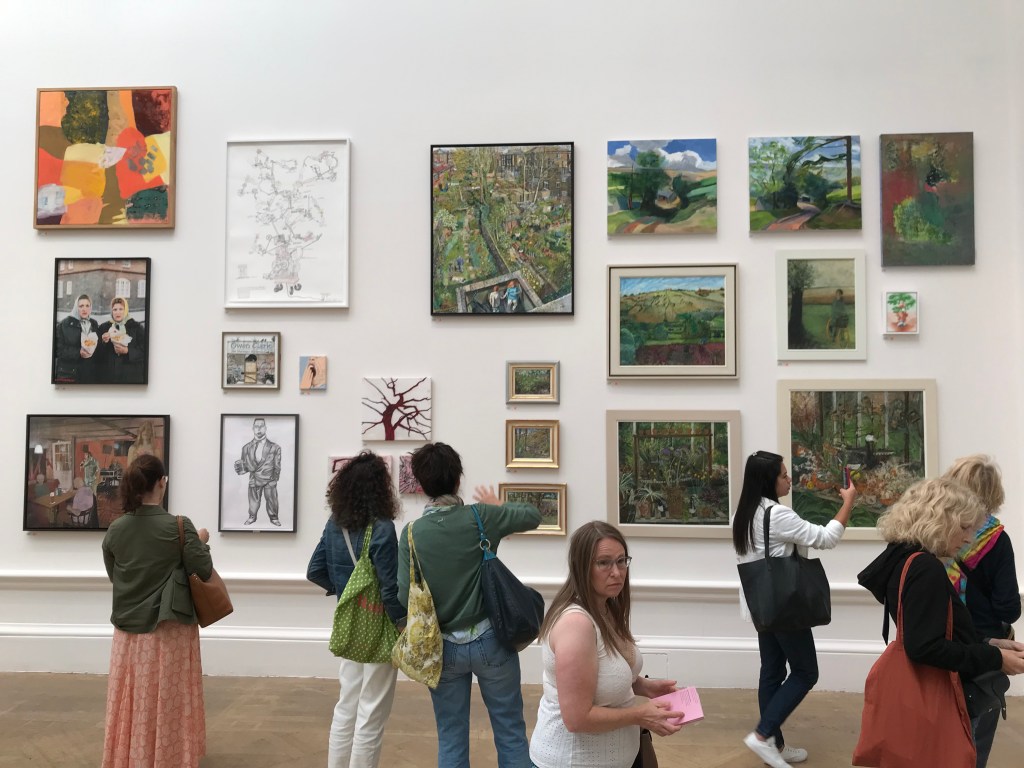
Another clash appeared in the Wohl Central Hall which included a grouping of representational landscape paintings. They are very nice works but, like an exclusive club for landscape painters, they look set apart from the rest of the works on the wall. This highlights the conventions of the Summer Exhibition and how sticking to its traditions weakens the case for innovation and progression in contemporary art. The Summer Exhibition is after all the product of an institution steeped in tradition and convention. It’s nothing ground breaking but it is enjoyable and it does feel like a step in the right direction in reflecting the diversity of contemporary art practice. I’m hoping they continue and go further for the next editions.
Find out more;
 contemporaryartprojects.art.blog