
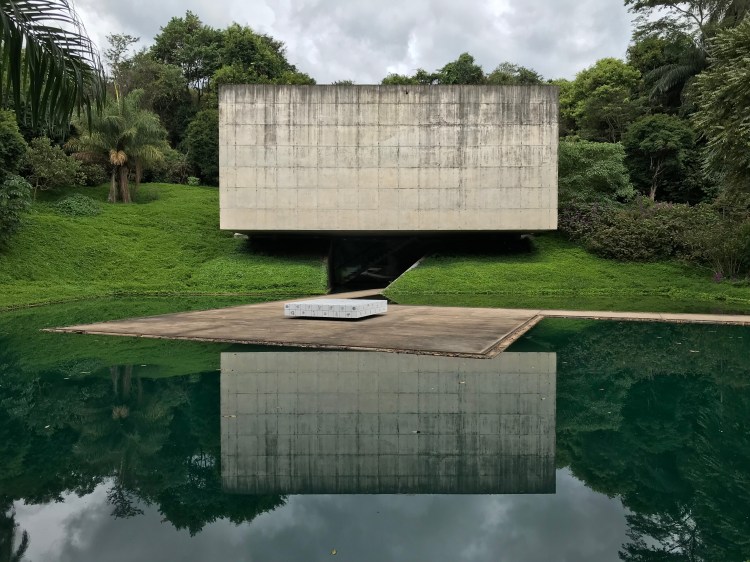
I was lucky enough to visit the Inhotim Institute earlier this year and I found it to be simply one of the most stunning settings that I have ever experienced contemporary art in. It is something like a combination of a botanical garden and sculpture park combined into one giant outdoor art centre. Inhotim has over 345 acres of land which includes some of the most impressive works of contemporary art and collections of plant life from across the world. The institute was founded by Bernardo Paz who was a mining magnate. He started to buy up tracks of land in the area to protect them from property developers and he subsequently transformed the area into what is now a protected natural heritage site. Arriving by coach takes around an hour and a half from Belo Horizonte and takes in spectacular views of the Atlantic Rainforest including the lush landscape from the mountain roads. I was excited to see a wild toucan flying overhead as I arrived at the entrance. After entering, visitors are guided by paths which take you through different zonal areas of the park. Inhotim promotes a holistic experience in which to enjoy both art and nature and you can walk through at your own pace but you can also jump aboard chauffeured golf buggies which take you from zone to zone. Each zone has a lot to see and they include pavilions, galleries, themed gardens, plant life and outdoor artwork.
Here are some of my highlights;
Galeria Adriana Varejão
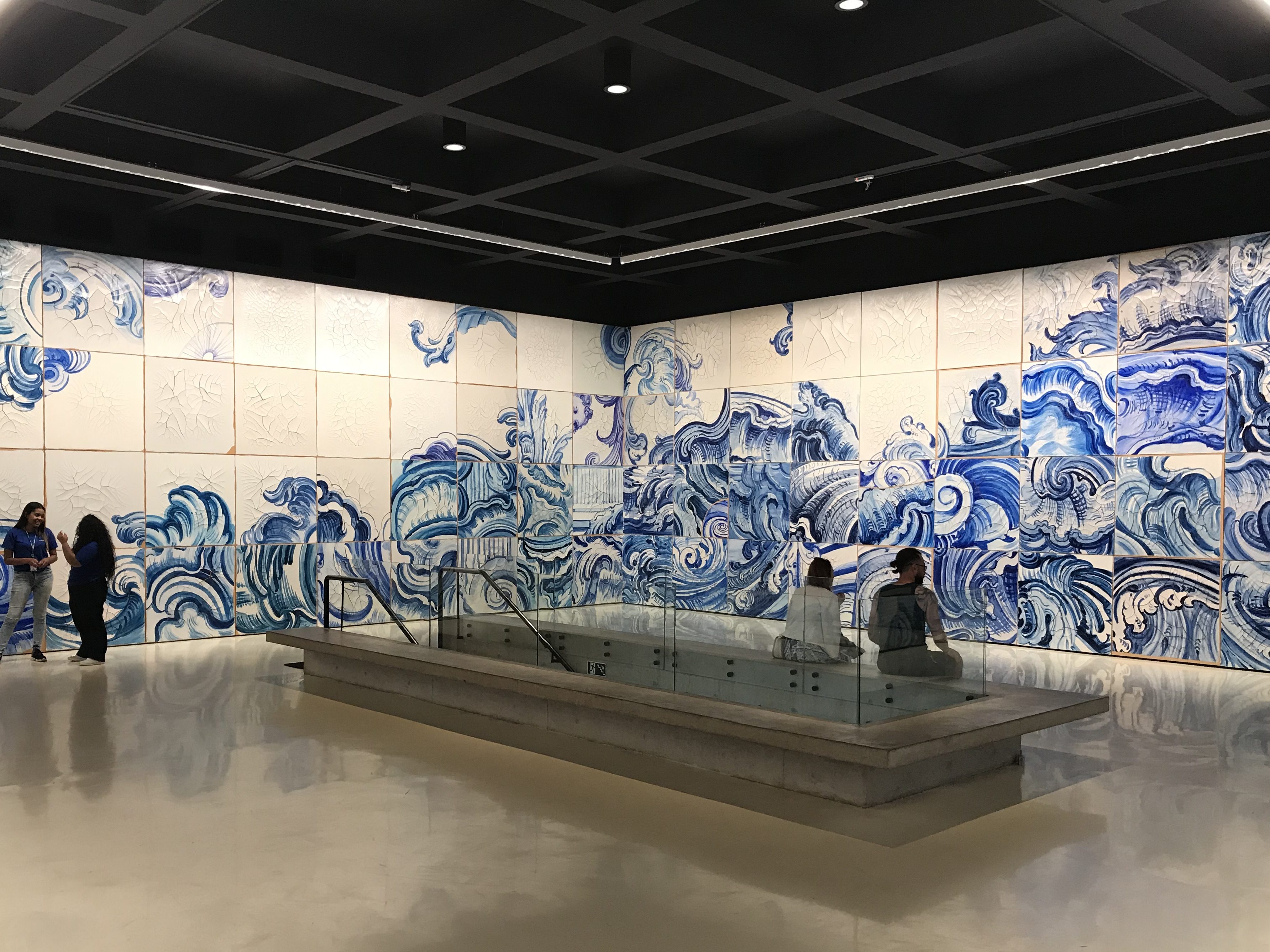
Housing the work of artist Adriana Varejão including the installation; ‘Celacanto Provoca Maremoto, 2004-08’, which was made in situ and reconfigures a panel of oversized Portuguese style tiles or azulejos.

Galeria Cosmococa
This gallery is the play area of Inhotim. It includes interactive installations with balloons, soft balls, hammocks and mattresses. The works were created by Brazilian artists Hélio Oiticica and Neville D’Almeida and highlight the importance of experimentation and play in contemporary art.

Beam Drop, 2008 by Chris Burden
A gigantic installation of steel beams which were dropped, by Burden and his team, from the height of a crane into a pool of wet concrete. Now permanently set in place the work encapsulates an act of randomness on a grand scale. It sort of looks like the ‘pick-up sticks’ game. The closer we get the better the installation frames the landscape and the red rust of the beams contrasts with the lush green of the surrounding foliage beautifully.

Galeria Psicoativa Tunga
Inhotim’s largest gallery houses the work of Brazilian artist Tunga. His work explores themes including the body, science and alchemy. The gallery is full of mixed media, sculptural installations which include models of skeletons, bones, skulls and scientific equipment which are symbolic in the artist’s work. They certainly gave the exhibition a macabre feeling.
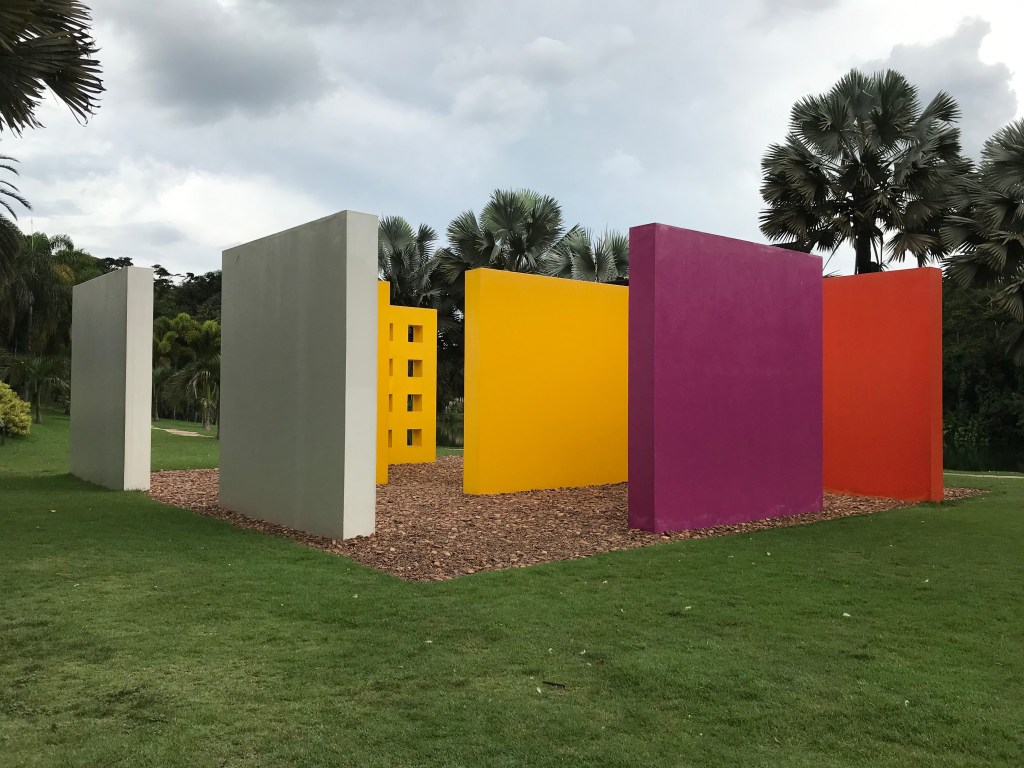
Magic Square #5, De Luxe, 1977 by Hélio Oiticica
This work is a beacon of colour. Magic Square is made up of nine separate painted concrete quadrangles arranged around a pebble covered floor. The installation invites viewers to enter and explore the internal spaces and brightly coloured walls. Each internal area creates a different feeling and produces a new perspective in the viewer. The work encourages engagement and an interaction between artwork and viewer and art and life.
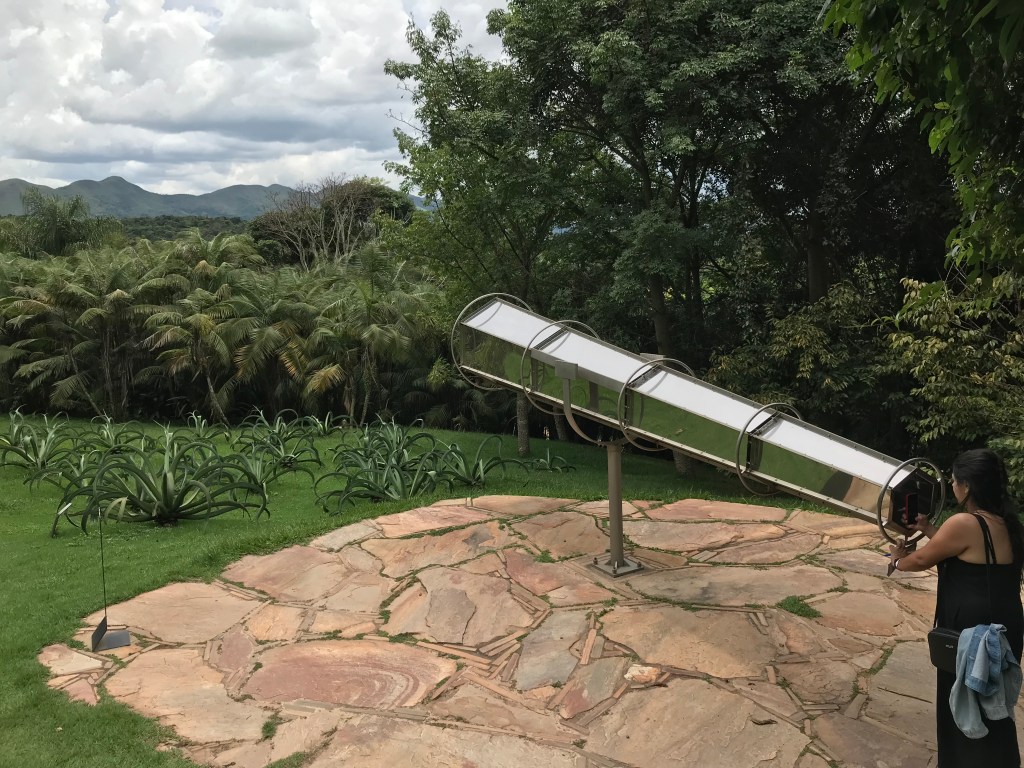
Viewing Machine, 2001 by Olafur Eliasson
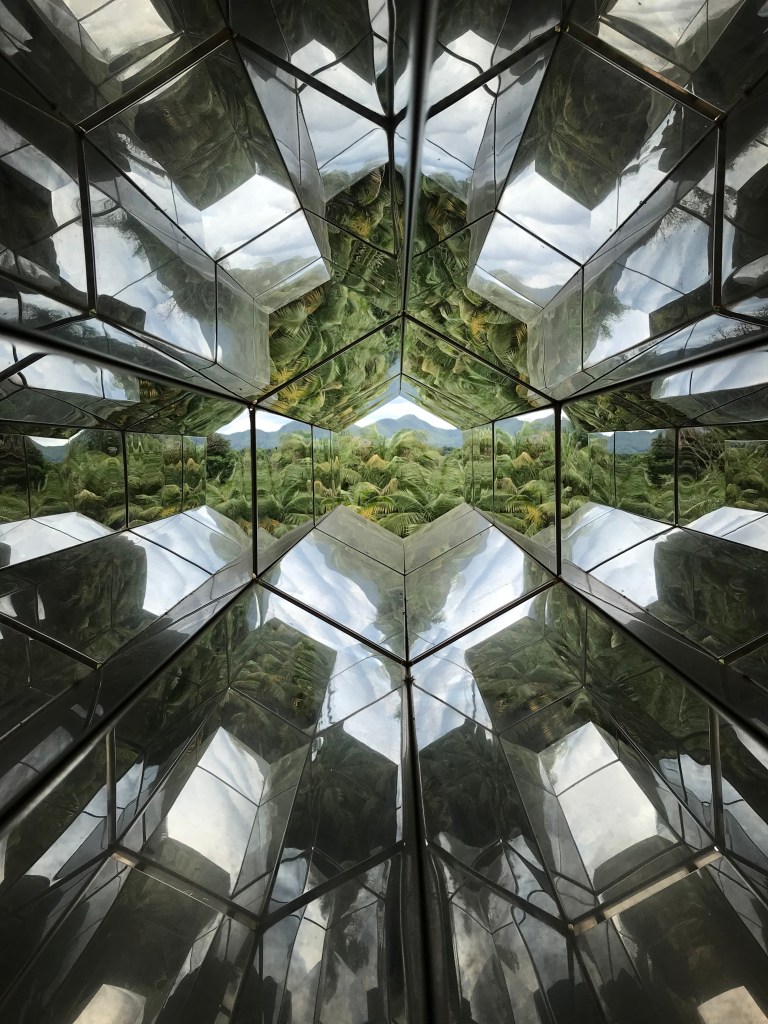
Viewing Machine won’t help you to see distant galaxies but it does give you a kaleidoscopic experience of the stunning surrounding landscape. This playful work alters our vision and transforms the landscape into dazzling geometric shapes. It also gives us a dramatic sense of distance and awareness of the incredible scenery including an impressive mountain range in the distance.
For more information please visit;
 contemporaryartprojects.art.blog
One thought on “Inhotim”