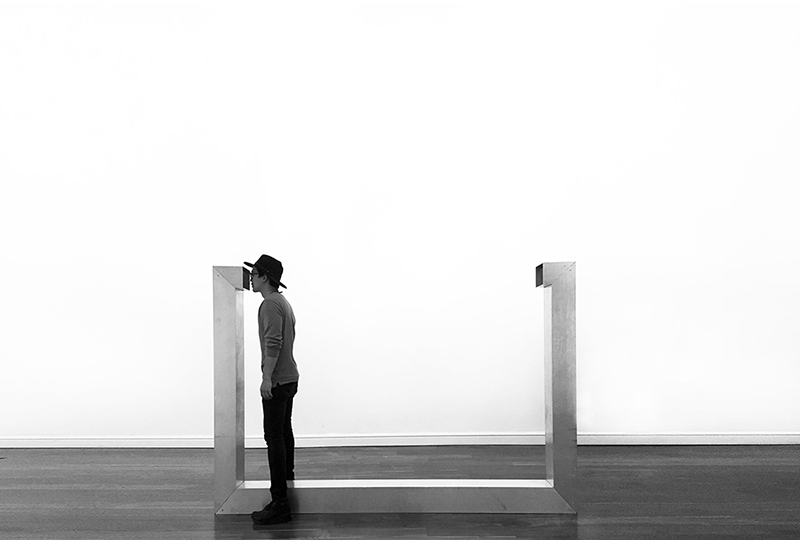
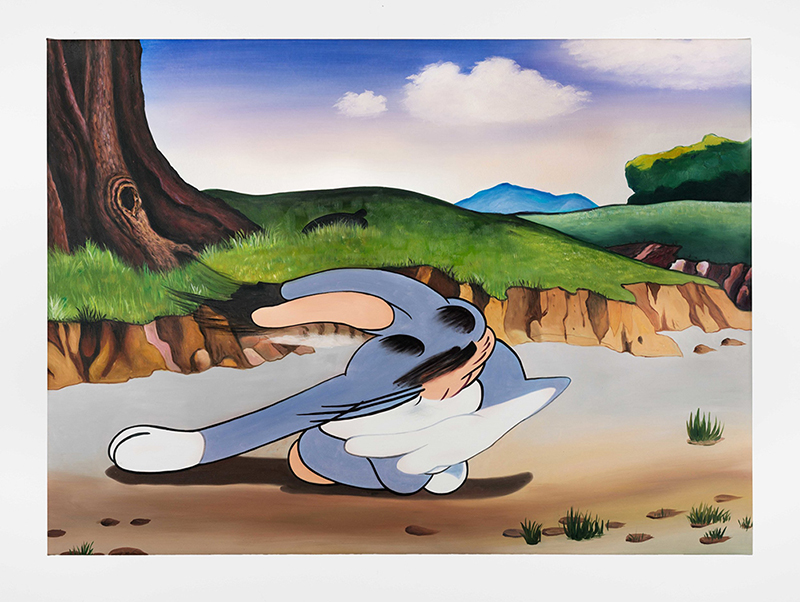
Interview with artist Edgar Serran for @floorrmagazine

“I typically choose raw materials for their political content, by which I mean the animal byproducts that are the building blocks of something known as dependency theory, which states that raw materials from underdeveloped countries are exported to wealthier nations/empires and enrich the latter at the expense of the former. I also attempt to evade the restrictions and the rules of painting, by using various commonplace materials to remind the viewer that painting is just a symbolic surface, which tries to reveal its meanings. I think that my work takes place, in its multiple forms, around a questioning of rhetoric and ethics of this and other forms of mediation. My desire is that it should erase frontiers, disrupt genres, and dissolve obstacles. I want my work to trigger associations and thoughts akin to those of the characters of Rayuela, a novel by Julio Cortázar:

‘This is what I think is reality’, thought Oliveira, fondling the plank and supporting himself on it. “This glass cabinet arranged, illuminated by 50 or 60 centuries of hands, imaginations, compromises, pacts, secret freedoms… Expecting that one is the center’, though Oliveira supporting himself more comfortably on the plank. ‘But it is immeasurably idiotic. A center so illusory as to expect to be ubiquitous. There is no center; there is a kind of continuous confluence, an undulation of matter. During the night I am an immobile body, and on the other side of the city a roll of paper is being transformed into the daily newspaper, and at 8:40 am I will leave the house, and at 8:20 am the newspaper will have arrived at the kiosk on the corner, and at 8:45 am my hand and the newspaper will be united and begin to move together in the air, at a meter from the ground in the path of the tram…’

The construction of that ‘figure’—as Cortázar would have called it—resists the perspectival unity of the image and brings about a reformulation of the person.”

Discover the work of artist Edgar Serran in an interview I did for Floor Magazine. Read the full interview here;

https://www.floorrmagazine.com/issue-16/edgar-serrano

Top image: Candid Camera 2016 ©Edgar Serrano

Read more interviews here; https://contemporaryartprojects.art.blog/category/interviews/
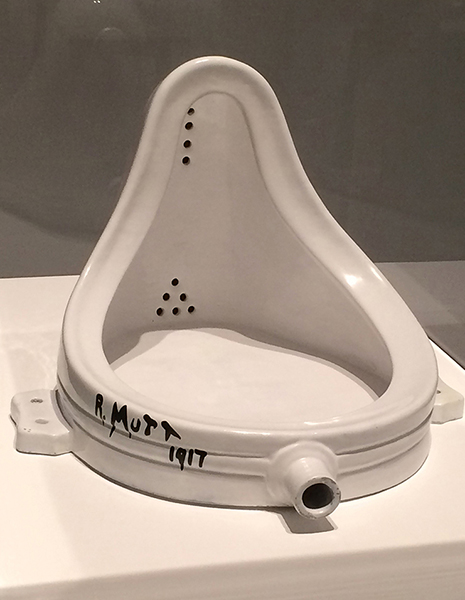
Contemporary Art Classics: ‘Fountain, 1917’

Marcel Duchamp. Fountain 1917, replica 1964 @ Tate Modern.

Marcel Duchamp’s ‘Fountain’ is a game changer. It represents the moment when what seemed like a hoax turned out to be the original conceptual art classic.

Duchamp originally submitted ‘Fountain’ to the inaugural exhibition of the Society of Independent Artists in New York in 1917. He had earlier helped found the society up and implement a new and democratic way of selecting artists for exhibitions. Duchamp entered the work under the pseudonym ‘R.Mutt’ to remain anonymous. Ironically ‘Fountain’ seemed to push the envelope a little too far as it was rejected by the group as “indecent” and lacking artistic merit. Duchamp subsequently resigned from the society in protest.

Duchamp’s ‘Fountain’ challenges our idea of ordinariness. By taking a common item and placing it in an art museum the artwork challenges our preconceived value system. If a standard urinal can suddenly become as valuable as a Fabergé egg, then value based on rarity is undermined. Vice versa, everyday objects gain more status. It epitomises the way great art has the power to make us look at the world in a new way.

‘Fountain’ was championed by a new generation of artists in the 1950’s and 1960’s and gained iconic status as the first conceptual artwork. The artwork continues to have a strong influence on artists today and can be considered a contemporary art classic.

‘Fountain’ at Tate Modern https://www.tate.org.uk/art/artworks/duchamp-fountain-t07573

Further reading:

https://www.tate.org.uk/art/artworks/duchamp-fountain-t07573

https://www.tate.org.uk/art/art-terms/c/conceptual-art

https://www.tate.org.uk/art/art-terms/r/readymade

Read more Contemporary Art Classics here.

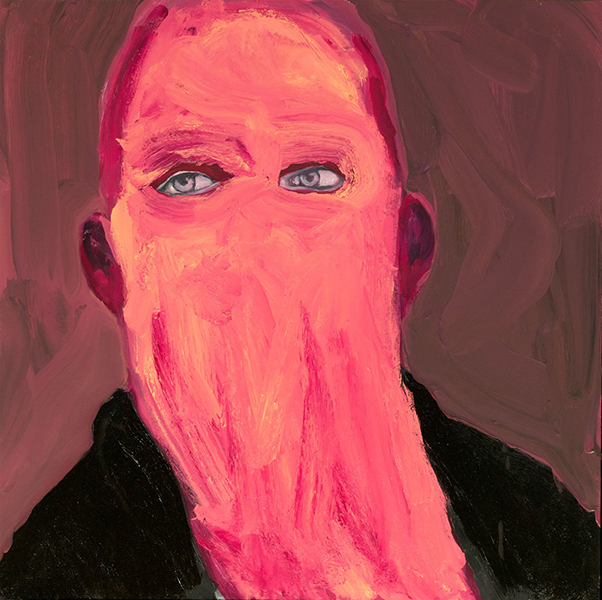
Interview with artist Hedley Roberts for @floorrmagazine

“My work is all about what is not known, evident or visible. I’m really interested how we ‘know’ each other, how we assess our knowledge of each other, and how we continually renegotiate our relationship to each other. In neuroscience there is a claim that there is specific part of the brain that specialised in facial recognition. Neuroscience also thinks that the brain ‘sees’ and interprets new information from the eyes quickly by piecing together using prior knowledge. So our brains are not reading every detail about the persons face, instead its making an approximation from an amalgam of data. Also, when we interact with each other we have ‘a priori’ sense that the other person has consciousness, and has a human experience that is basically similar to our own. In actuality we cannot have empirical knowledge of their experience of being – we cannot truly ‘know’ the other person, we can only guess. Our human experience and our ‘knowledge’ of each other is always guessing at what is not visible.”

In conversation with artist Hedley Roberts. Read the full interview here;

https://www.floorrmagazine.com/issue-19/hedley-roberts

Image credit: ‘Professor’ © Hedley Roberts

Read more interviews here; https://contemporaryartprojects.art.blog/category/interviews/
Contemporary Art Classics: ‘Infinity Mirror Room – Phalli’s Field’

Inside the ‘Infinity Mirror Room’ we are confronted with an endless sea of red dots and organic forms. These forms are phallic like objects which protrude from the floor and appear to interweave each other like garden worms.  They are a collection of soft sculptural forms which have been painted with sequences of red dots. The works surround a small viewing platform in one end of the room. This space is surrounded by mirrors which reflect and repeat the forms into a mesmerizing optical illusion. ‘Infinity Mirror Room – Phalli’s Field’ was created by artist Yayoi Kusama in 1965. The work is part of a series of ‘Infinity Mirror Room’ installations which have been made over the course of Yayoi’s career. They are ground-breaking, immersive installations which create the illusion of vast, endless space through kaleidoscopic environments. Visitors become active participants by being reflected in the work. Yayoi’s ‘Infinity Mirror Rooms’ have influenced several contemporary artists and a trend of immersive installations in contemporary art. Her signature dots are obsessively repeated throughout the work and are used as motifs to respond to hallucinations Yayoi first experienced as a child. In 1977, Yayoi voluntarily checked into a psychiatric hospital and has proceeded to live and make artwork from this same site ever since.

The work is part of the Boijmans van Beuningen Museum collection in Rotterdam, Netherlands.

Read more Contemporary Art Classics here.

Superflat

Superflat is a contemporary art movement which was created by artist Takashi Murakami in 2001. The movement includes artists and designers who make work which uses flatness as a core part of the artwork. Superflat artists reference a broad range of influences in their work, including subjects from Japanese socio-political history and contemporary Japanese art and design. The movement was created by artist Takashi Murakami as a way to describe ideas in his own process but then became a way to link ideas in other artist’s work. Murakami brought these themes together in the exhibition ‘Superflat’, which he curated at MoCA, California, USA in 2001.

Such Cute Flowers by Takashi Murakami, 2011 Offset lithograph 50 × 50 cm ©Takashi Murakam

Such Cute Flowers by Takashi Murakami, 2011 Offset lithograph 50 × 50 cm ©Takashi Murakam

CHAOS by Takashi Murakami, 2016 Offset Lithograph 50.8 × 50.8 cm ©Takashi Murakam

CHAOS by Takashi Murakami, 2016 Offset Lithograph 50.8 × 50.8 cm ©Takashi Murakam

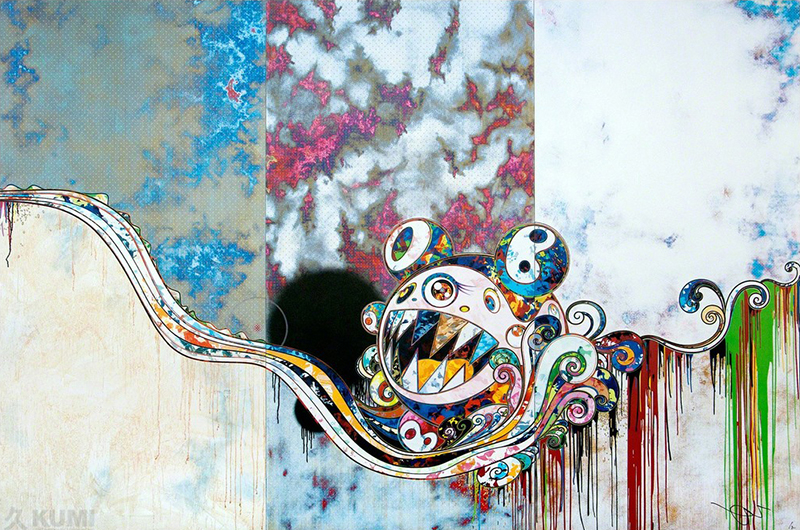
The Superflat style looks similar to advertising or commercial art. It can be big, bold and bright and feature cartoon like characters or graphic motifs. Artists use visual flatness to critique consumer culture. In Superflat, flatness becomes a parody of the visual style of advertising, graphic design and pop culture. They use the same graphic style but without the fluffy, glossed over marketing. Instead, socially taboo or darker subjects are used to explore themes outside of the mainstream narrative and so undermine the established visual language. Flatness in Superflat also references the traditions of Japanese art and design before modern consumer culture.

Much of the work in Superflat is influenced by the style and subject matter of mangaanime and Japanese popular culture. Many of the artists had previously worked in the commercial art sector. After an economic downturn in Japan during the 1990’s, artists became more suspicious of the dominant language of visual advertising and communication. They took the style of this language and used it to blur the line between ‘high’ and ‘low culture’ and explore new themes of identity.

City Glow by Chiho Aoshima, 2005 Chromogenic print 170 × 170 cm ©Chiho Aoshima

City Glow by Chiho Aoshima, 2005 Chromogenic print 170 × 170 cm ©Chiho Aoshima

Fuckin' Politics by Yoshitomo Nara, 2003 Offset Lithograph 54.1 × 72.9 cm ©Yoshitomo Nara

Fuckin’ Politics by Yoshitomo Nara, 2003 Offset Lithograph 54.1 × 72.9 cm ©Yoshitomo Nara

Sunny Day Holy Joy by Yoshimoto Nara, 1995 Oil on canvas 53 × 65.2 cm ©Yoshimoto Nara

Sunny Day Holy Joy by Yoshimoto Nara, 1995 Oil on canvas 53 × 65.2 cm ©Yoshimoto Nara

Noshi & Meg On Earth by Aya Takano, Year 2036, 2005 Lithograph 58.4 × 50.8 cm ©Aya Takano

Noshi & Meg On Earth by Aya Takano, Year 2036, 2005 Lithograph 58.4 × 50.8 cm ©Aya Takano

Untitled by Chiho Aoshima, 2009 Color on Japanese rice paper 32 × 20.5 cm ©Chiho Aoshima

Untitled by Chiho Aoshima, 2009 Color on Japanese rice paper 32 × 20.5 cm ©Chiho Aoshima

Superflat has had a significant impact on contemporary culture and has influenced several international groups and artists. The artists featured in the 2001, Superflat exhibition included Takashi Murakami, Yoshitomo Nara, Chiho Aoshima, Yoshinori Kanada, Henmaru Machino, Koji Morimoto, Katsushige Nakahashi, Shigeyoshi Ohi, Masafumi Sanai, Chikashi Suzuki, Aya Takano, Kentaro Takekuma and Hitoshi Tomizawa, Bome, Enlightenment (Hiro Sugiyama), groovisions, SLEEP, and 20471120.

For more info check out the links below;

https://en.wikipedia.org/wiki/Superflat

http://www.artnet.com/Magazine/features/drohojowska-philp/drohojowska-philp1-18-01.asp

https://web.archive.org/web/20040223082912/http://www.hirokiazuma.com/en/texts/superflat_en1.html

Top of page image credit: 727×777 by Takashi Murakami, 2016 Lithograph 65.7 × 98 cm ©Takashi Murakam

Contemporary Art Classics: ‘Ink Splash 2’

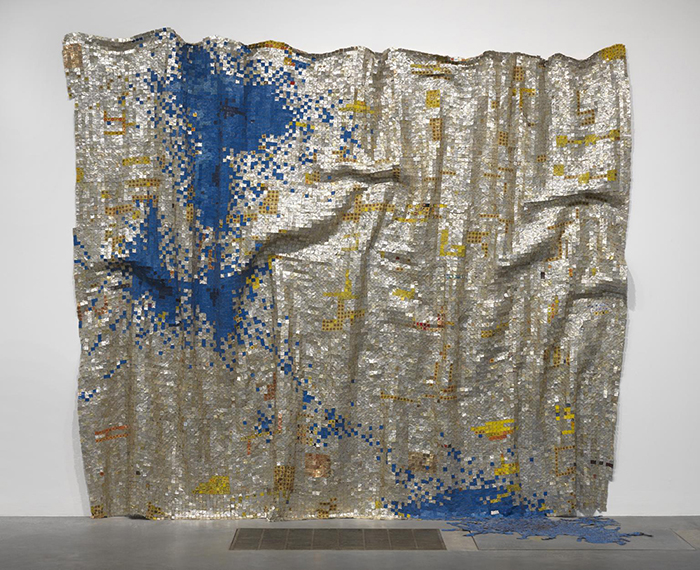
A splatter of blue ink drips across a shimmering silver surface. From the far side of the gallery this work looks like a painterly abstraction but on closer inspection we can see that this is not ink at all! ‘Ink Splash 2’ is really an assemblage made up of seals taken from alcohol bottles which have then been sewn together using copper wire to create a large metallic sheet. The work is unframed and has been displayed so that it drapes down the gallery wall like a curtain. The undulations, folds and protrusions are sculptural elements which help the work to come to life in the gallery. The piece was made by Ghanian artist El Anatsui. Based in Nigeria he makes sculptural works which reuse materials from his local surroundings. The chosen materials are symbolic of time and place and can be seen as commenting on consumerism, globalisation and the environment. His use of found materials also highlight the practise of reuse as a necessity for everyday survival.

‘Ink Splash 2’ marks a break through in El Anatsui’s work by seeking to explore multiple physical possibilities in a single work of art. By combining elements of both painting and sculpture the work has helped to break traditional categorizations of art and redefine the art object. El Anatsui defines himself as both a painter and sculptor. He was awarded a Golden Lion for Lifetime Achievement at the Venice Biennale in 2008.

Read more Contemporary Art Classics here.

Interview with artist Joshua Miller for @floorrmagazine

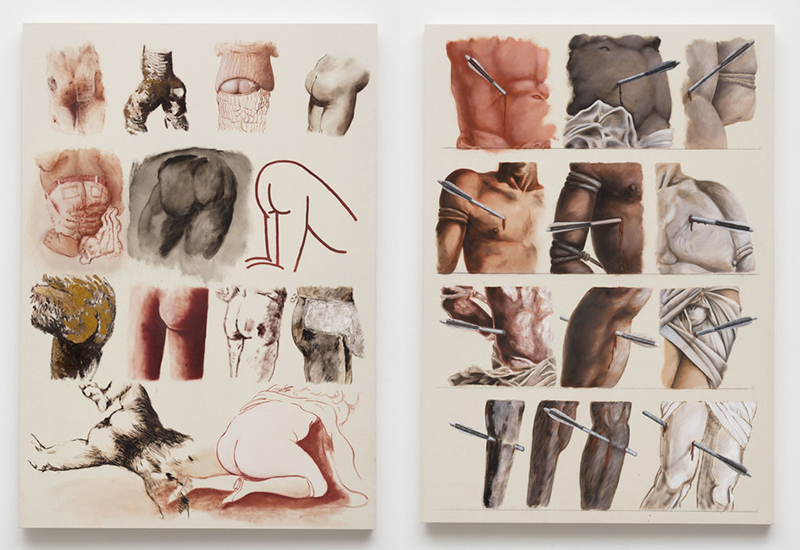
“I favor this gridded and repetitive format because it gives me the room to do both. The paintings can take a lot of abuse; so long as there are one or two representations of the subject that are close to a signifier that the viewer is familiar with (a duck-looking duck, a banana-looking banana), the game of representation suddenly inverts and there is endless room for distortion and alienation. Typically, in representation, we strive to get close enough to saying the thing without being didactic or obvious. But if I paint a bland duck-looking duck in one portion of the painting, it becomes painfully boring to paint or look at a duck-looking duck a second time. I am launched into this fight over and over again to find some new way to see and say “duck!” To win the fight and keep the painting interesting, I have to push the physical qualities of paint and stretch the conceptual framework of the signifier. “

In conversation with Joshua Miller for Floor Magazine. Find out more by reading the full interview here;

https://www.floorrmagazine.com/issue-17/joshua-miller

Read more interviews here; https://contemporaryartprojects.art.blog/category/interviews/
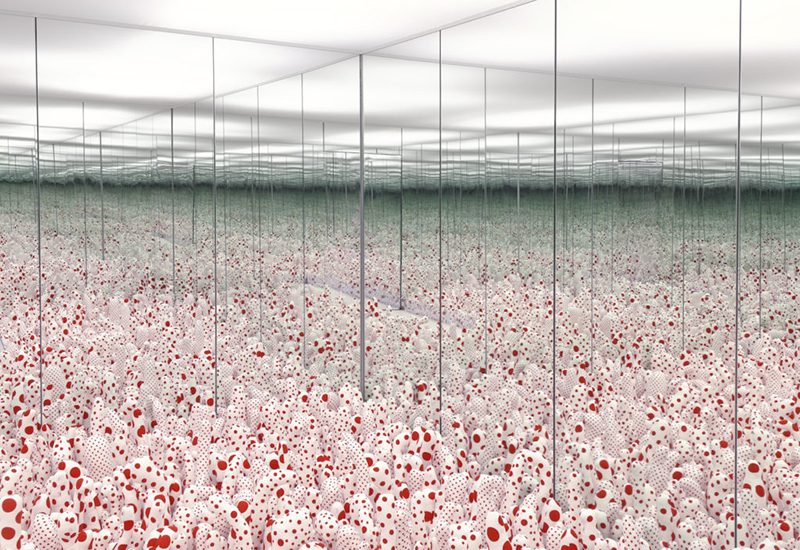
Image credit: Utility And Apathy Human Asses and Utility And Apathy Saint Anthony, 2016 © Joshua Miller

Interview with artist Sophie Vallance for @floorrmagazine

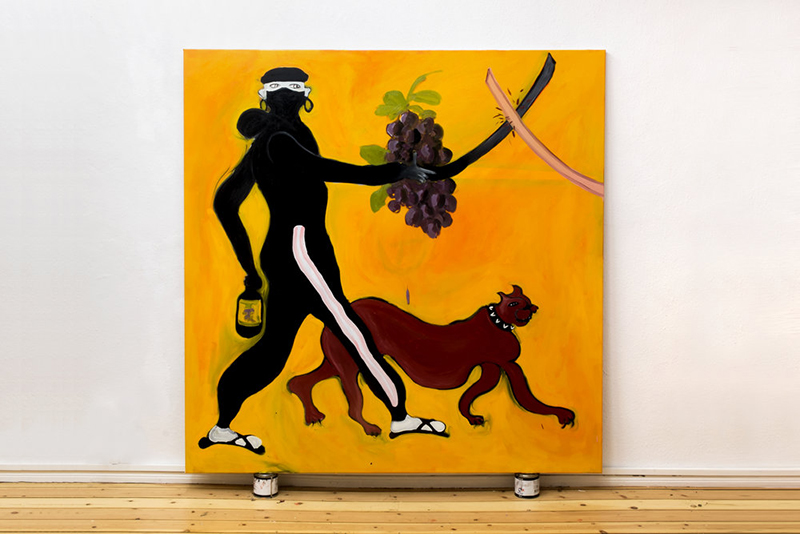
“Making paintings is basically making a series of decisions, and its one of the only things in life that makes me be really present with what I’m doing, so the act of painting as well as the subject matter ends up being therapeutic. Ultimately, by addressing anxiety, I’m hoping to transform vulnerability into power, whether its through humour or seriousness, it definitely helps me alter how I’m feeling.”

Read the full interview with artist Sophie Vallance here;

https://www.floorrmagazine.com/issue-16/sophie-vallance

Image credit: “Gae Yersel Peace” 2018 ©SophieVallance

Read more interviews here; https://contemporaryartprojects.art.blog/category/interviews/
Contemporary Art Classics: ‘The Physical Impossibility of Death in the Mind of Someone living’

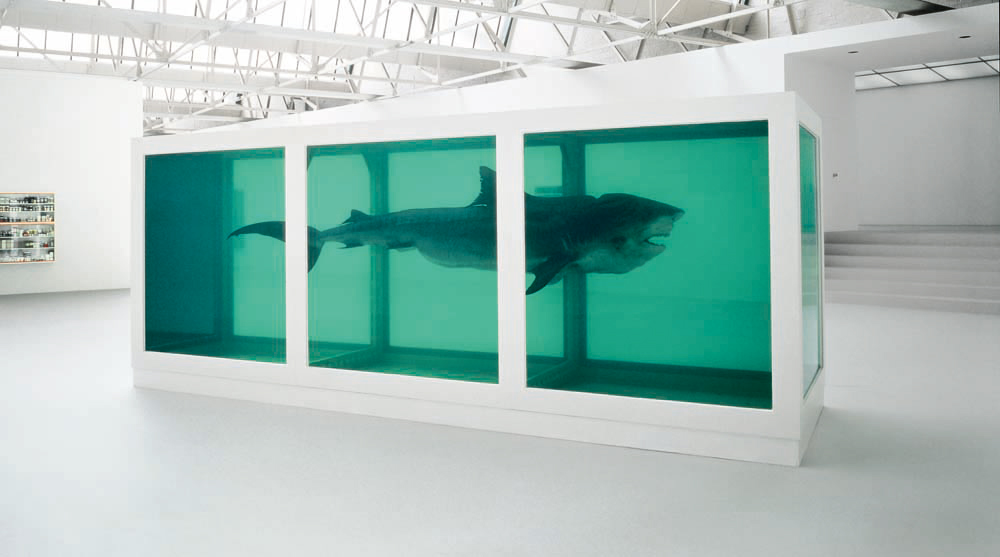
This is the big kahuna of Britart. It is a big weighty symbol of the cultural impact made by the YBA’s (Young British Artists) in the 1990’s. ‘The Physical Impossibility of Death in the Mind of Someone living’ or ‘The Shark’, is a sculpture by the artist Damian Hirst. The work was made at the invitation of art collector Charles Saatchi. He offered Damian the opportunity to create an artwork at any expense. The result is a sculptural assemblage of objects including a tiger shark, preserved in formaldehyde, inside a steel vitrine. The power of the work relies on its placement. Although a preserved shark would not look out of place in a natural history museum it becomes a totally unexpected object within a fine art gallery setting. And it is a genuinely terrifying to experience the work face to face. The work pits us against the shark which is terrifying but also dead. Damian sets up this conceptual conundrum in the title of the work. ‘The Shark’ challenges the established idea of art. Damian’s work has been influenced by the conceptual art movement. The use of non-traditional materials and emphasis on idea instead of process breaks with established ideas of art making practise. The work, like the YBA group of artists, is big, bold and brash. It is full of bravado and irony and has become an iconic work of contemporary art.

Read more Contemporary Art Classics here.

Interview with artist Kwanwoo Park for @floorrmagazine

“My practice is like making mirrors. The mirror that reflects different perspective, different spacetime, but the subject who stares at the mirror can always be found in the work.

Challenging the relational structure between the viewer and the artwork is the thing which I really enjoy. I try to make work that let the audience become the part of the work itself, without being aware of it. So the viewer can find themselves by othering its relation with the work. I hope my questions to be delivered to the audience as very personal, even though the subject that I am dealing with could be seen as universal.”

I talked with artist Kwanwoo Park for Floorr Magazine. Find out more about his work and practise by reading the full interview here;

https://www.floorrmagazine.com/issue-16/kwanwoo-park

Top image: Stranger ©Kwanwoo Park

Read more interviews here; https://contemporaryartprojects.art.blog/category/interviews/

Design a site like this with WordPress.com
Get started