Interview with artist Willian Santos

“I’m interested in the relationship between the abstract and the figurative. The challenge is to the viewer. I aim to challenge their perspective of reality and see how far my work will take them.” – Willian Santos in discussion with Contemporary Art Projects.

CAP. Could you tell us a bit about yourself and your background. Where did you study?

Willian Santos. I was born in 1985 in the city of Curitiba which is in the south of Brazil. I graduated in 2009 as a Bachelor of Visual Arts. I have been making art since the age of fourteen. I studied with the artist, Carla Vendrami who gave me my first lessons in painting. I then studied at the Federal University of Paraná with the artist Geraldo Leão. These experiences provided rich information which still informs my work today.

CAP. What is the arts scene like in Brazil?

WS. There is a strong art scene in Brazil and there are artists I really admire. The art scene in Curitiba is made up of really committed artists. Funding and studio space may be precarious but artists are never the less dedicated to their practice and advancing contemporary art. The picture differs in other regions of Brazil. I am concerned by the relationship between art fairs and galleries. Many critics, artists and curators seem to be consumed by the commercial relationship between the art fair and gallery rather than the art. This seems to be a similar situation around the world.

'Dossel Florestal' 2017 Acrylic, Araucaria Angustifolia bark, packaging, paper and polyurethane on canvas, 230 x 330 cm © Willian Santos
‘Dossel Florestal’ 2017 Acrylic, Araucaria Angustifolia bark, packaging, paper and polyurethane on canvas, 230 x 330 cm © Willian Santos

CAP. There is an exciting energy in your artworks, as though they are caught between a state of forming and decaying or becoming. Is this reflective of where you are as an artist at the moment?

WS. This is an important theme in my work and practice. I am very interested in creating a sense of movement in my paintings. I also like to leave a trace of the process in my work. I am exploring the language of painting as a way to engage the viewer. I think the relationship between intention and the process of making creates an exciting tension or suspense in the viewer which is something I’m trying to capture. I am a young artist so the movement in my work may also be reflective of my context and place.
© Willian Santos

CAP. What are your main artistic influences? Are there any particular artists you’re inspired by?

WS. During the beginning of my career I studied several artists and their methods as a way to inform my own practice. I often incorporated other artist’s styles in my early work as a way of learning and developing my own style. I am also influenced by experimenting and working in the studio. But I really admire the work of Jasper Johns, Matisse, Caspar Friederich, Philip Guston, Rodin, Edward Hopper and Anselm Kiefer.

CAP. You’ve said that you use a “process of self-provocation with intent of creating different work methods, avoiding a style or a repetitive procedure”. Can you tell us a bit more about your technique? Do you start with an idea in mind or does meaning come through during the process of making?

WS. The idea of ​​finding a set method for work is something that terrifies me. What excites me in each new job is to find new challenges. I need fresh provocation and inspiration to start a project. I like to work with the ideas that are already in my mind but I also experiment and find new possibilities.
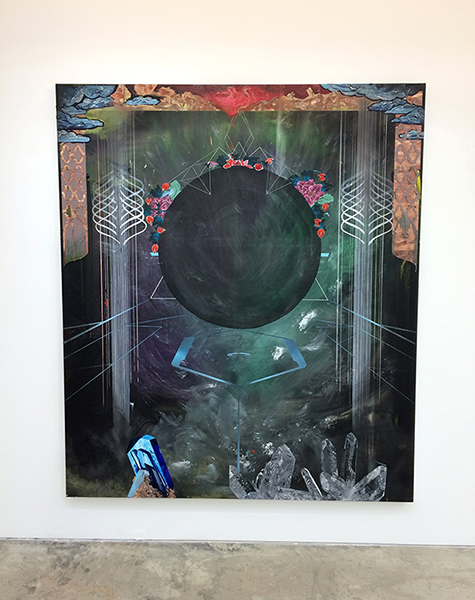
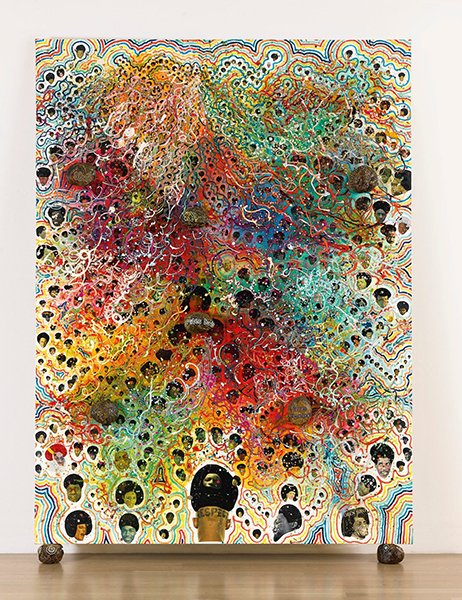
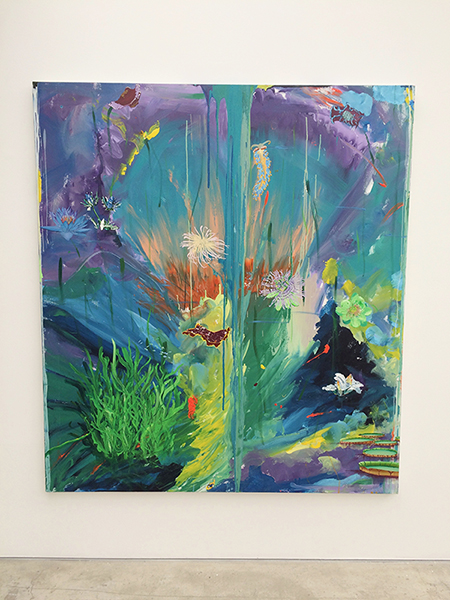
‘Ádito’ Acrylic, encaustic and enamel on canvas, 220 x 180 cm, 2016 © Willian Santos

CAP. You’ve mentioned that your artworks “allow the audience to simultaneously go beyond and fall short of the image, a state of suspension.” What are the challenges in producing artwork that walks this tightrope?

WS. I think of this suspension as a hesitation. I’m interested in the relationship between the abstract and the figurative. The challenge is to the viewer. I aim to challenge their perspective of reality and see how far my work will take them. It’s very challenging to know where the viewer sits in this interplay.

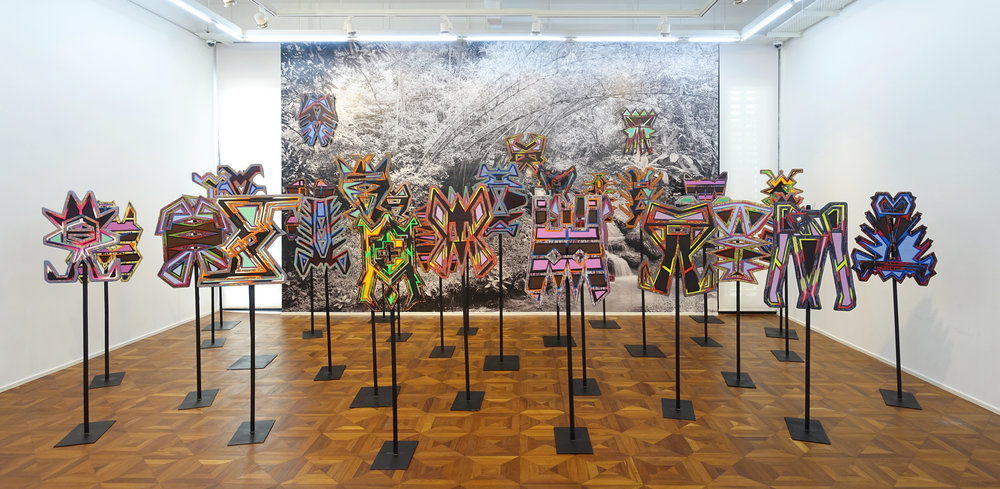
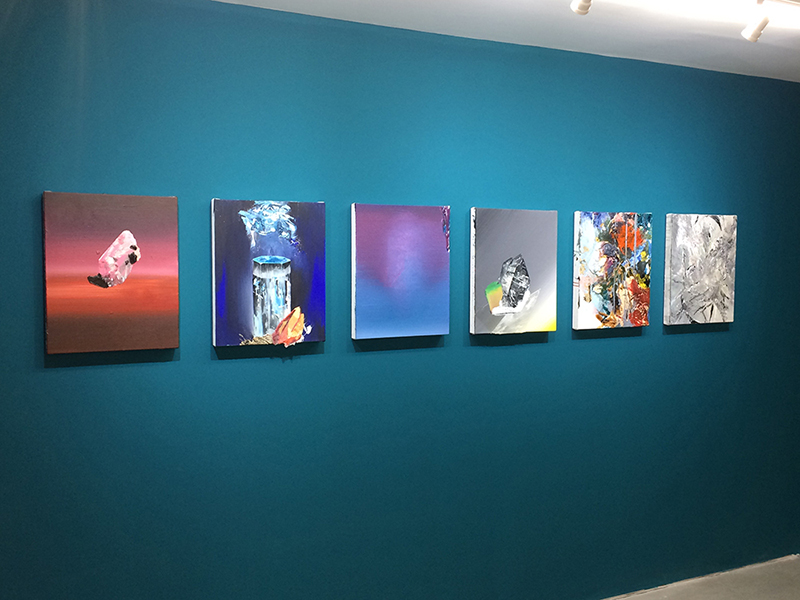
‘Recôndito Plasmado’ @ Sim Galeria, Curitiba, Brazil 2018 installation view

CAP. What have you got planned next?

WS. I plan to develop my practice, with new research and new work. I have also been searching for residencies outside of Brazil.

Visit Willian’s website here; https://www.williansantos.com/

Read more interviews; https://contemporaryartprojects.art.blog/category/interviews/
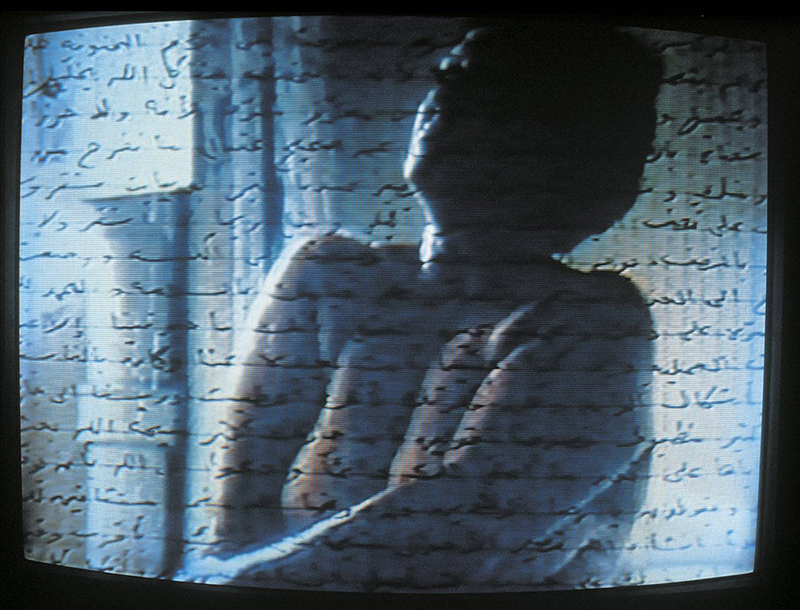
Contemporary Art Classics: ‘Measures of Distance’

‘Measures of Distance’ is an artwork about exile and displacement. The work is a video piece which presents still images of the artist’s mother overlaid with text and audio in both English and Arabic. It was made by artist Mona Hatoum in 1988. Born in Beirut, Lebanon in 1952, Mona then moved to London to study art in 1975. During her visit to London war broke out in Lebanon which left her stranded and exiled from her home country. ‘Measures of Distance’ reflects the physical, emotional and cultural distance Mona experienced in her new adopted homeland. The artist uses her mother’s body as a symbol of home. In the video the figure of her mother appears half naked in the shower. These intimate images both scrutinize and celebrate her mother’s body. They candidly confront traditional stereotypes of women and explore the artist’s own relationship with her mother. Mona locks the image of her mother below sentences of decorative, Arabic text. They look like lines of barbed wire which make the figure appear even more distant and unreachable. The image of her mother could also be seen to stand as a metaphor for the loss of her homeland and for the war in Lebanon. Mona further explores her sense of loss with audio of taped conversations. The audio is recorded in both English and Arabic which makes it difficult for non-fluent speakers to follow the narrative fully. This reflects the difficulties in communicating between two different cultures. The exploration of the female form and personal relationship in ‘Measures of Distances’ challenges taboos and traditional ideas of identity.

Read more Contemporary Art Classics here.

The Bull and the Shit

Roehampton’s Alton Estate was once considered an architectural marvel. The design of the buildings in this South West London estate was influenced by leading modernist architect, Le Corbusier and they were built in the cutting-edge Brutalist style of the 1950’s. But the Alton Estate has since fallen into disrepute and is now seen as an eyesore in this leafy borough set next to Richmond Park.

A view of Alton West

A view of Alton West.

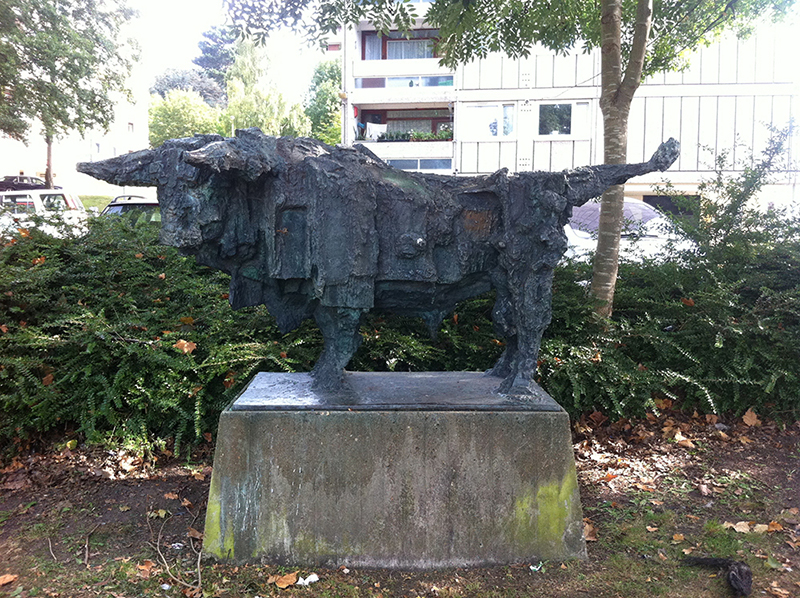
A public sculpture standing in Alton West seems to symbolise the struggle that the estate has been going through. ‘Bull’, 1961, by artist Robert Clatworthy was placed in the Alton Estate as a way to complement the built environment and aggrandise the major architectural project of the 1950’s. The work is a bronze cast of a standing bull. The bull’s head turns towards the adjacent Danebury Avenue. The form of the bull is made up of straight edges and rectangular shapes in a geometric abstract style which echoes the point blocks nearby. The surface of the sculpture has dulled over time but there are still areas of its original colour visible.

‘Bull’, 1961, by Robert Clatworthy

‘Bull’, 1961, by Robert Clatworthy.

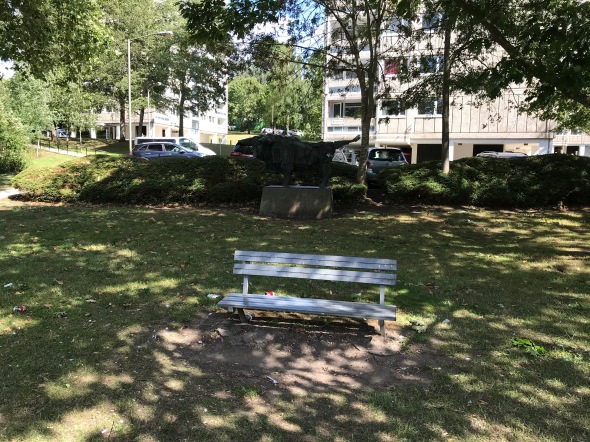
The sculpture looks like a typical modernist work of art. It is based on a plaster cast and the plaster was applied so loosely that we can see parts of the original frame exposed. This method reveals how the form of the bull has been built up. The technique also shows how the artist has tried to capture the bull’s movement using an expressionist style. The problem with the sculpture is the same issue facing the Alton Estate. The issue is that the condition and style of both the sculpture and estate have been neglected and so have become ugly over time. The sculpture’s gnarled, rawness doesn’t do much to lift the atmosphere. The presentation and location of the work also does not help. It is situated between a bus stop and a car park. It’s not an ideal spot. The work has become kind of invisible to passers-by. There are empty beer bottles left under a bench. It looks like litter and the sculpture share the same neglect in this part of London.

A location view of ‘Bull’, 1961, by Robert Clatworthy

A location view of ‘Bull’, 1961, by Robert Clatworthy.

‘Bull’ was commissioned by the London County Council in 1959 at the request of one of the main architects of the Alton Estate. It measures approximately ten feet in length and was considered the flagship artwork of the Alton West Estate development. The grade two listed sculpture fails to engage passers-by because its outdated style and subject matter do not relate to Roehampton or the local community. Coming from Roehampton I do remember the sculpture making a good climbing frame and swinging post while waiting for the bus home from school. But I don’t remember anyone appreciating the quality of the work itself.

Although the Alton Estate is set in a prime location in South West London, the estate has fallen into neglect. Buildings and services have fallen into disrepair; crime levels have remained constant and many residents live with a sense of apathy towards the estate. The estate has also been earmarked for a substantial ‘regeneration’ project which has been on and off for the last several years. This means that a number of buildings are due to be demolished to make way for new, luxury but still ‘affordable’ apartment buildings.

This long neglect and process of gentrification is a betrayal of the socialist principles which Le Corbusier based his building designs on and which were then imitated in the Alton Estate development. Despite allowing the estate to fall into disrepair Wandsworth Council and their property development company have only started publicising its engagement with local community groups in recent years. These include a number of grass roots arts organisations. Are the council again using the arts to aggrandise their projects for economic benefit and at the cost of the local community? As with Robert Clatworthy’s ‘Bull’, the arts in Roehampton like the future of the new Alton Estate may be doomed to fall into another cycle of neglect.

Read more from the blog; https://contemporaryartprojects.art.blog/blog/

Interview with artist Douglas Cantor for @floorrmagazine

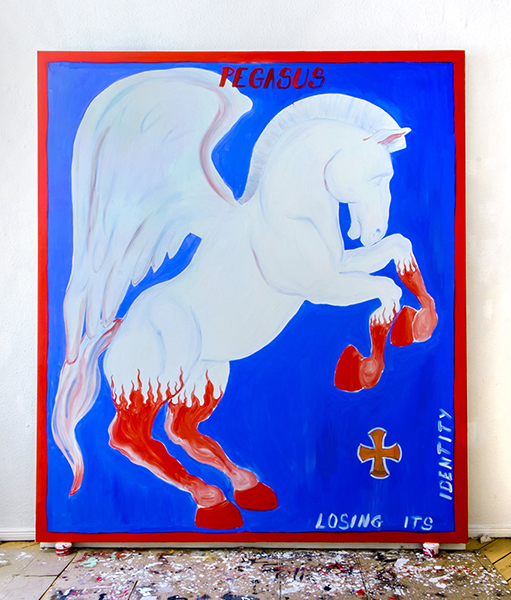
“A lot of what I do revolves around the concept of identity and I think having had to move and relocate both by choice and by force plays a big role in this. Geographical location is directly related to culture, and this in time heavily informs identity. Cultural identity comes with so much cultural baggage which can be very restrictive, so drastic changes of context sort of force change, which can be great ground for developing further, re-inventing and trying new things, in other words it can be the catalyser for a sense of freedom and a wider less restrictive perspective of existence. I grew up in Colombia but London shaped me, both as a adult and an artist, then having to give it up, along with the things I identified with to move to Berlin rebooted the whole thing again and allowed me access to yet another layer of perspective, all of this reflects in the work. I feel British, I feel immigrant, I feel Latino, that complexity adds layers to one’s identity and this helped me understand my own identity as a changing fluid process rather a still reality, this in time helped me get rid of a great deal of self-imposed rules that were restrictive to my work.”

In conversation with artist Douglas Cantor. Read the full interview here;

https://www.floorrmagazine.com/issue-16/douglas-cantor

Read more interviews here; https://contemporaryartprojects.art.blog/category/interviews/
Top image: Brace Brace Embrace 2018 ©DoulasCantor

Contemporary Art Classics: ‘Straight’

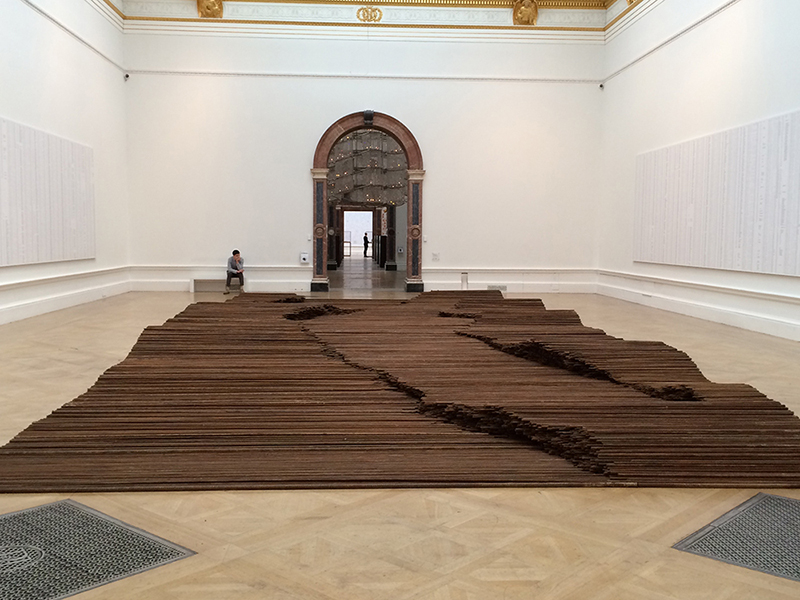
‘Straight’ by artist Ai Weiwei is not straight forward. It is a monumental floor-based sculpture made up of 90 tons of carefully arranged steel rods. The huge number of rusty rods laid out is mesmerising. They have been arranged in broken undulations to make up a large rectangle on the gallery floor. But the works stylistic simplicity contrasts sharply with its conceptual complexity.

Weiwei recovered the steel rods from school buildings which had been destroyed in the Sichuan earthquake in China in 2008. The earthquake destroyed some twenty schools and killed over 5,000 people. Mangled and bent from the damage, Weiwei had the rods straightened back into shape for his sculpture. He has also included the names of the victims on the walls of the gallery along with a documentary video as part of the installation.

The work is as much about documenting the disaster as it is about remembering the loss of life. The schools had been cheaply built by contractors and located on seismic fault lines. The information retrieved by Ai Weiwei had been hidden and covered up by the Chinese government. The presentation of ‘Straight’ is an act of defiance in revealing the truth. The piece is also very still and peaceful. Its monumental size encourages the viewer to contemplate the scale of the loss of human life.

Ai Weiwei’s work often explores the role of the Chinese government in reported human rights abuses. As a prominent critic of the government Weiwei has regularly suffered censorship at the hands of the Chinese authorities. In 2011, Weiwei was imprisoned without trial for 80 days. But he remains one of the most influential contemporary artists.

Read more Contemporary Art Classics here.

For more info please follow the links below.

https://www.theguardian.com/artanddesign/2015/jun/15/ai-weiwei-ra-show-sichuan-earthquake-chinese-artist-steel-rods

http://www.criticismism.com/2015/10/01/ai-weiwei-straight-2008-12/#sthash.6I0LEDFG.dpbs

Hip-Hop vs Fine Art: Part 3

Contemporary hip-hop like contemporary fine art is made up of a variety of sub-genres and styles. Themes from the old school era and golden age of hip-hop are still influential in contemporary hip-hop culture. The artist Kendrick Lamar uses a confessional style of rap and explores themes of alcoholism, drug addiction and depression in his work. His lyrics are often dark and direct. Lamar’s work feels reflective, introspective and perhaps comment on the consequences of excess and indulgence.

“Pour up, drank, head shot, drank
Sit down, drank, stand up, drank
Pass out, drank, wake up, drank
Faded, drank, faded, drank

Now I done grew up round some people living their life in bottles
Granddaddy had the golden flask back stroke every day in Chicago
Some people like the way it feels
Some people wanna kill their sorrows
Some people wanna fit in with the popular that was my problem
I was in the dark room loud tunes, looking to make a vow soon
That I’mma get fucked up, fillin’ up my cup I see the crowd move
Changing by the minute and the record on repeat
Took a sip, then another sip, then somebody said to me”

‘Swimming Pools (Drank)’ 2012 by Kendrick Lamar.

Songwriters: Kendrick Lamar, Tyler Williams, Nikhil Shanker Seetharam. Swimming Pools (Drank) lyrics © Sony/ATV Music Publishing LLC, Warner/Chappell Music, Inc

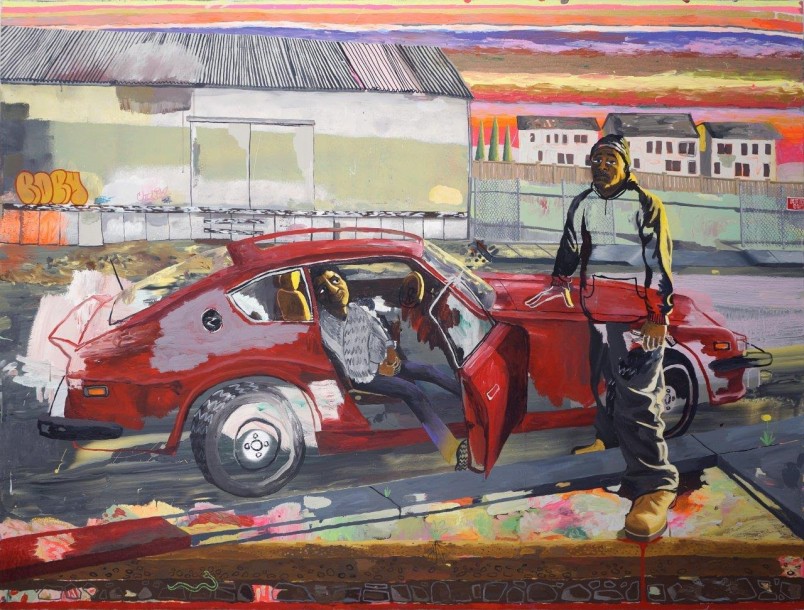
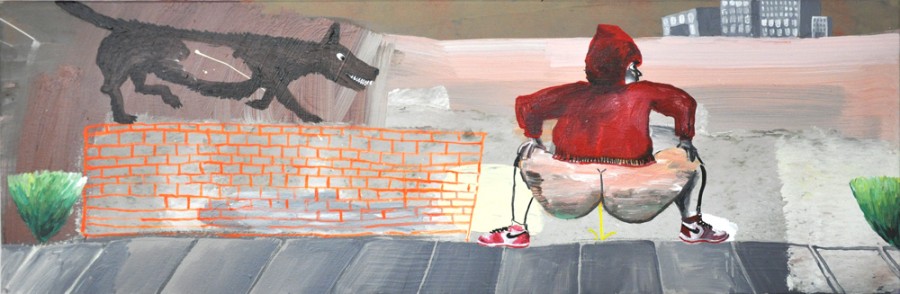
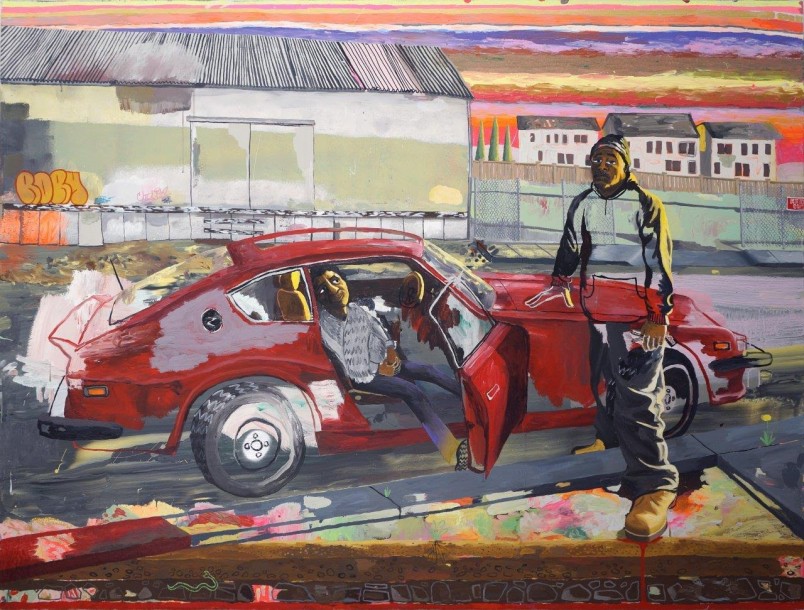
The painter Cate White makes similarly confessional observations in her work. In her paintings White often depicts personal relationships and intimate moments between people she knows. White lives and works in Oakland, California and regularly pictures deprived urban areas. The urban environment in White’s work is gritty and real. The figures in her paintings are caught in a state of forming. They are partly represented and partly sketched out in outline. This gives the work a deconstructed style as though White is peeling back the layers of reality. There’s no visual security. Like Lamar, White’s introspection and reinvestigation of the urban environment closely mirrors trends in contemporary hip-hop.

Rory and His Mother and His Z, 2017 Acrylic, house paint, spray paint, glitter on canvas 60 x 80 ©Cate White

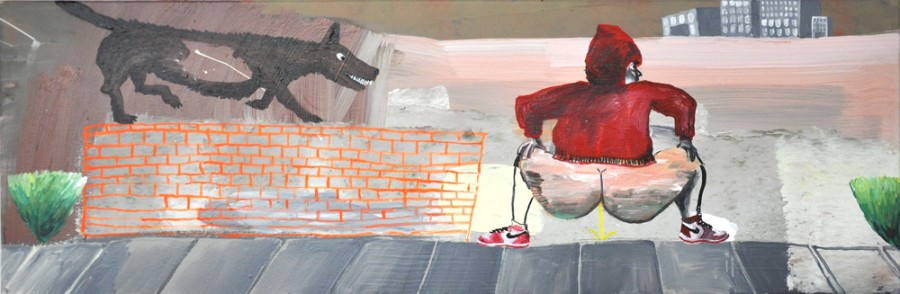
Pissing in the Hood, 2017 acrylic, latex on canvas, 12 x 36 in ©Cate White

Catch up with Hip-Hop v Fine Art Part 1 and Part 2.

Further reading:

https://en.wikipedia.org/wiki/Hip_hop_music

https://en.wikipedia.org/wiki/Hip_hop

https://www.tate.org.uk/art/artists/chris-ofili-2543

https://www.tate.org.uk/whats-on/tate-britain/exhibition/chris-ofili/chris-ofili-exhibition-guide/chris-ofili-room-2

https://en.wikipedia.org/wiki/Jean-Michel_Basquiat

https://catewhite.com/home.html

https://www.sfgate.com/entertainment/article/Cate-White-an-outsider-no-longer-6568815.php#photo-8753539

Interview with artist Haffendi Anuar for @floorrmagazine

“As a child, I had always enjoyed painting landscapes, jungle scenes and mountainscapes. I think the first serious artwork I remember completing was a landscape painting in washy watercolour of a landscape of a lake with two skinny swans. I studied sculpture at art schools and the thinking process behind my work has always been around the object. Sculpture has always have a strong relationship to the landscape, with public sculptures responding to the context of the area or the landscape as well as land art in the 1960s and 70s. Thus I have always wanted to link my undying interest in the landscape, but explore the expanded notion through objects. This idea of the landscape that I am interested in is not always something physical, it could be a “dimension” informed by design, object, politics and the Internet.”

In conversation with artist Haffendi Anuar. Read the full interview here;

https://www.floorrmagazine.com/issue-17/haffendi-anuar

Image credit: Installation view of ‘Migratory Objects’ at Richard Koh Fine Art, Kuala Lumpur. 2017 © Haffendi Anuar

Read more interviews here; https://contemporaryartprojects.art.blog/category/interviews/

Hip-Hop vs Fine Art: Part 2

During the mid-1980’s hip-hop entered a golden age of expression and the culture flourished and became part of the mainstream. With this success came a new sensibility, attitude and visual identity. Hip-Hop became bigger, bolder and brasher. A new ‘swagger’ replaced the struggles of the late 1970’s and early 1980’s. Hip-Hop became stylistically victorious and boastful. The culture now exuded confidence and focused on themes of materialism, indulgence and excess.

The rappers Mase and Puff Daddy embodied this laid-back swagger in their song ‘Feel So Good from 1997.

“Do Mase got the ladies? Yeah, yeah
Do Puff drive Mercedes? Yeah, yeah
Take hits from the 80’s? Yeah, yeah
But do it sound so crazy? Yeah, yeah
Well me personally
It’s nuthin’ personal
I do what work for me
You do what work for you”

Songwriters: Joel Diamond, Lee Shapiro, L. Russell Brown

Feel So Good lyrics © Sony/ATV Music Publishing LLC, Universal Music Publishing Group

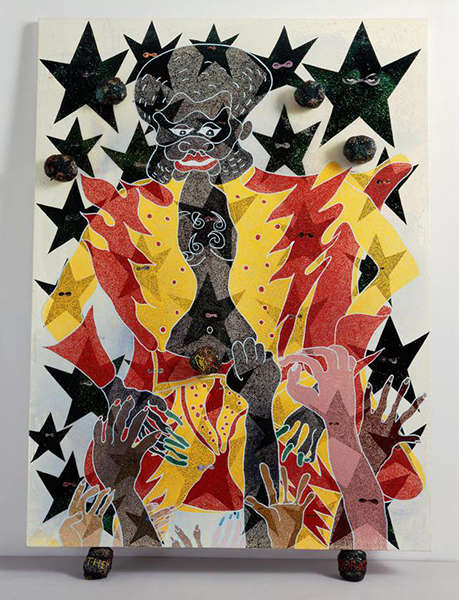
Afrodizzia, 1996 acrylic, oil, polyester resin, paper collage, glitter, map pins and elephant dung on linen ©Chris Ofili

The 1990’s were also a time of innovation in fine art. In the UK, the YBA’S (Young British Artists) gained status and success by making ‘shock art’ and creating ground-breaking exhibitions in previously derelict industrial warehouses. The artist Chris Ofili was one of the YBA’s to gain recognition for his work in the controversial exhibition; Sensation which was first held in 1997 at the Royal Academy of Arts in London.

Ofili makes paintings with exuberant colours and intricately detailed patterns. They are bold, vibrant and confident paintings. He appropriates a wide range of visual ideas and techniques, from blaxploitation movies to Zimbabwean cave painting, in his work. For example, his recognizable trademark is using balls of elephant dung to stand his paintings up on. This unusual presentation technique was inspired by a research trip to Zimbabwe in 1992. By sampling ideas from a wide range of traditions and sources Ofili creates new narratives and meanings in his work.

The Adoration of Captain Shit and the Legend of the Black Stars (2nd Version), 1998 Acrylic, oil, polyester resin, paper collage, glitter, map pins and elephant dung on canvas two elephant dung supports ©Chris Ofili

The Adoration of Captain Shit and the Legend of the Black Stars (2nd Version), 1998 Acrylic, oil, polyester resin, paper collage, glitter, map pins and elephant dung on canvas, with two elephant dung supports ©Chris Ofili

In ‘The Adoration of Captain Shit and the Legend of the Black Stars’ the figure of Captain Shit stands majestically over his adoring audience. He dazzles with his broad white smile and vibrant red and yellow outfit. Captain Shit is a fictional character, loosely inspired by Marvel superhero Luke Cage, created by Ofili. This work manifests the swagger of the golden era of hip-hop.

Catch up with Part 1 of Hip-Hop v Fine Art here; https://contemporaryartprojects.art.blog/2021/03/15/hip-hop-vs-fine-art-part-1/

Contemporary Art Classics: ‘A Subtlety’

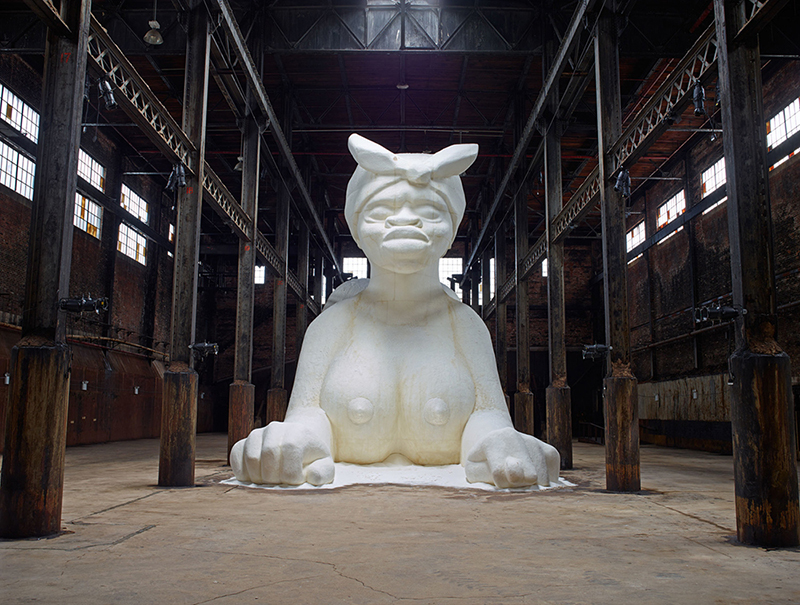
‘A Subtlety’, also known as the ‘Marvellous Sugar Baby’, is a monumental sculpture of a sphinx-like woman by artist Kara Walker. The enormous crouching figure is a dazzling white and wears a kerchief around her head. The work is the artist’s first public art project and is a collaboration with Creative Time, a non-profit arts organisation in New York. The piece was first installed in the Domino Sugar Refining Plant in New York in 2014. The plant was once the world’s largest sugar factory and the piece references the history of slavery in the production of sugar. ‘A Subtlety’ refers to sculpted sugar treats which were commonly served to guests during aristocratic banquets in Medieval Europe. The sculpture is also based on racist, stereotyped and overly sexualised imagery of black women. Walker expertly references race, sexuality, slavery and inequality while creating a visually alluring artwork. The whiteness of the sugar-coated sculpture contrasts sharply with its racist source material and the darkened interior of the factory. The effect is both striking and compelling. The vast warehouse space is dotted with sugar-sculpted children carrying baskets with sweets. ‘A Subtlety’ pays tribute to the workers and slaves who played a part in the production of sugar.

For more information please visit;

http://creativetime.org/projects/karawalker/

http://www.karawalkerstudio.com/2014

Read more Contemporary Art Classics here.

Hip-Hop vs Fine Art: Part 1

Hip-Hop and Fine Art have not always been considered as close artistic allies, but they have both become dominant forces in popular culture. Both genres have created their own traditions and influenced a broad range of art forms.

In this three part blog I’m going to explore the influence of hip-hop culture in contemporary art. I want to investigate this cultural exchange in order to draw parallels, explore differences and similarities in artistic intent and production. Taking three key visual artists I’m going to examine where and how the key elements of hip-hop come through in their art.

Hip-Hop is best known as a genre of music but it also includes other art forms. As a cultural movement hip-hop has a strong visual identity. Legendary DJ Afrika Bambaataa included graffiti art as one of the core elements of hip-hop culture. Responding to the urban environment is a key theme that connects hip-hop and fine art. The artist Jean-Michel Basquiat started his career as a graffiti writer and street artist in the Lower East Side of Manhattan, New York in the 1970’s. He worked with his friend Al Diaz to spray paint satirical slogans and statements on buildings in Lower Manhattan. Their graffiti writing gained notoriety and they became collectively known as SAMO (same old as in same old shit). After SAMO Basquiat went on to become one of the most famous visual artists of the twentieth century.

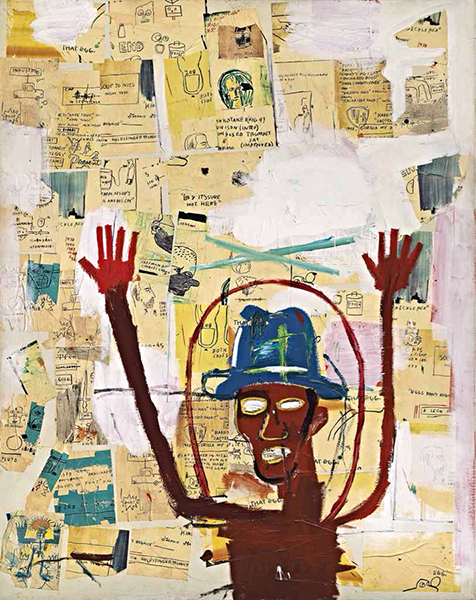
Toxic, 1984 acrylic and colour Xerox collage on canvas 86 x 68 in ©Jean-Michel Basquiat

Basquiat’s work fuses a street art style with a mix of expressionist colours and collaged social commentary. He explored social conditions and critiqued social, political and historical systems in his work. As part of his practise Basquiat consumed knowledge and ideas. These influences spill out into his work. He sampled visual imagery from encyclopaedias, reference books and tv. He remixed these visual ideas in his drawings and paintings and often juxtaposed these with contrasting images to set up complex and sophisticated narratives in the work.

‘Toxic’, 1984 depicts the cropped portrait of the figure of a black man with a blue hat and red hands. The figure has been painted on top of a collaged background of photocopied drawings and loose patches of white paint. The man looks as though he has been caught by surprise. His hands are held high in the air as though he has just been stopped by the police.

As with ‘Toxic’, Basquiat’s work explores institutional racism and social inequality. His work embodies hip-hop with its raw energy, celebration of popular culture and directness. If Basquiat’s artwork was a hip-hop track it would have a deep-bass layer of expressionist brushwork overlaid with street art percussion and a socially conscious rap.

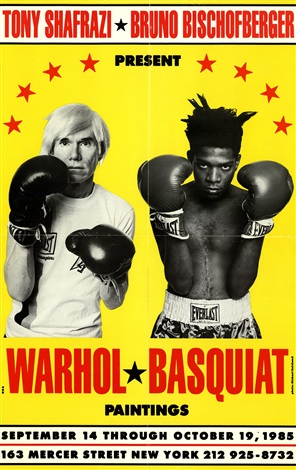
Warhol/ Basquiat Paintings, 1985 screenprint on paper ©The Andy Warhol Foundation for the Visual Arts, Inc.

Grandmaster Flash is another artist who depicted conditions in the urban environment. In the ground-breaking track ‘The Message’ from 1983, Grandmaster Flash and the Furious Five use lyrics which vividly describe the hardships of living in the city.

“Broken glass everywhere
People pissin’ on the stairs, you know they just don’t care
I can’t take the smell, can’t take the noise
Got no money to move out, I guess I got no choice
Rats in the front room, roaches in the back
Junkies in the alley with a baseball bat
I tried to get away but I couldn’t get far
‘Cause a man with a tow truck repossessed my car

Don’t push me ’cause I’m close to the edge
I’m trying not to lose my head
It’s like a jungle sometimes
It makes me wonder how I keep from goin’ under”

Songwriters: Clifton Nathaniel Chase, Edward G. Fletcher, Melvin Glover, Sylvia (usa) Robinson. Message lyrics © Kobalt Music Publishing Ltd.

Read Hip-Hop v Fine Art Part 2 here; https://contemporaryartprojects.art.blog/2021/03/19/hip-hop-vs-fine-art-part-2/

Design a site like this with WordPress.com
Get started